
alpha-Ketoglutarate Dehydrogenase Complex
Carbohydrate Metabolism
Alpha-ketoglutarate dehydrogenase complex catalyzes the conversion of alpha-ketoglutarate to succinyl-CoA in the citric acid cycle.
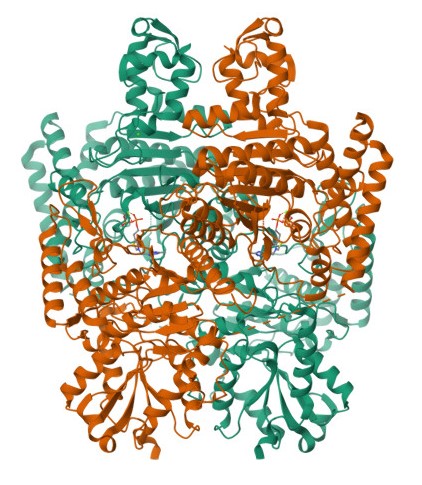
This reaction is crucial for energy production as it is one of the rate-limiting steps in the cycle, linking amino acid metabolism with cellular respiration. The enzyme complex consists of three subunits: an alpha-ketoglutarate dehydrogenase, a transsuccinytase, and a dihydrolipoamide dehydrogenase, and it requires several cofactors, including thiamine pyrophosphate (TPP), lipoic acid, CoA, FAD, and NAD+ for its catalytic activity.
The reaction catalyzed by the alpha-ketoglutarate dehydrogenase complex is a decarboxylation reaction, where alpha-ketoglutarate, derived from the breakdown of amino acids, is decarboxylated to form succinyl-CoA, a four-carbon compound. Succinyl-CoA then enters the next step of the citric acid cycle, where it is converted into succinate, contributing to the generation of GTP (or ATP) and NADH, which are key energy carriers.
Additionally, alpha-ketoglutarate, the substrate for this enzyme, is an important intermediate in amino acid metabolism, especially in the synthesis and breakdown of glutamate and other amino acids. Therefore, the activity of the alpha-ketoglutarate dehydrogenase complex is vital for the integration of carbon and nitrogen metabolism.
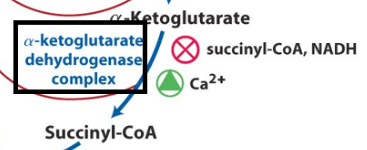
Regulation of the enzyme complex is tightly controlled by cellular energy needs. It is allosterically inhibited by high levels of ATP, NADH, and succinyl-CoA, which signal sufficient energy and prevent overproduction of ATP. On the other hand, the complex is activated by ADP, indicating low energy levels, and by calcium ions, which signal the need for more ATP production, particularly in muscle tissues.
Overall, the alpha-ketoglutarate dehydrogenase complex plays a critical role in energy metabolism, bridging the metabolism of carbohydrates, lipids, and proteins through the citric acid cycle, and is tightly regulated to maintain metabolic balance within the cell.