


Isocitrate Dehydrogenase
Carbohydrate Metabolism
Isocitrate dehydrogenase catalyzes the conversion of isocitrate to alpha-ketoglutarate in the citric acid cycle.
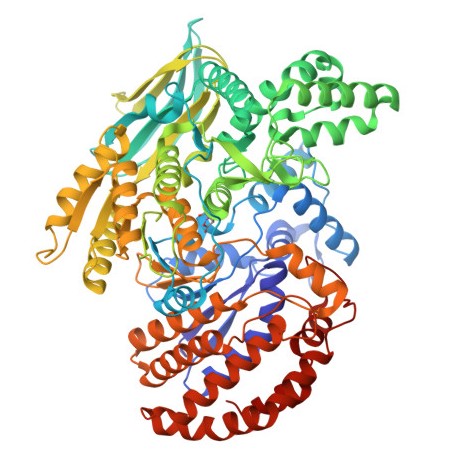
The reaction also produces NADH and CO2, which are essential for energy production. Isocitrate dehydrogenase is an important enzyme in the mitochondria, where it helps maintain the flow of the citric acid cycle, which is central to ATP production through oxidative phosphorylation. In addition to NAD+ as a cofactor, isocitrate dehydrogenase exists in two isoforms: one that uses NAD+ (in eukaryotes) and one that uses NADP+ (in plants and some bacteria).
The enzyme catalyzes the oxidative decarboxylation of isocitrate, resulting in the reduction of NAD+ (or NADP+) to NADH (or NADPH) and the release of CO2, forming alpha-ketoglutarate. This reaction links carbon metabolism and energy production, as alpha-ketoglutarate enters the citric acid cycle, where it further contributes to ATP generation. The NADH produced during this reaction is used in the electron transport chain to generate ATP, the cell’s primary energy currency.
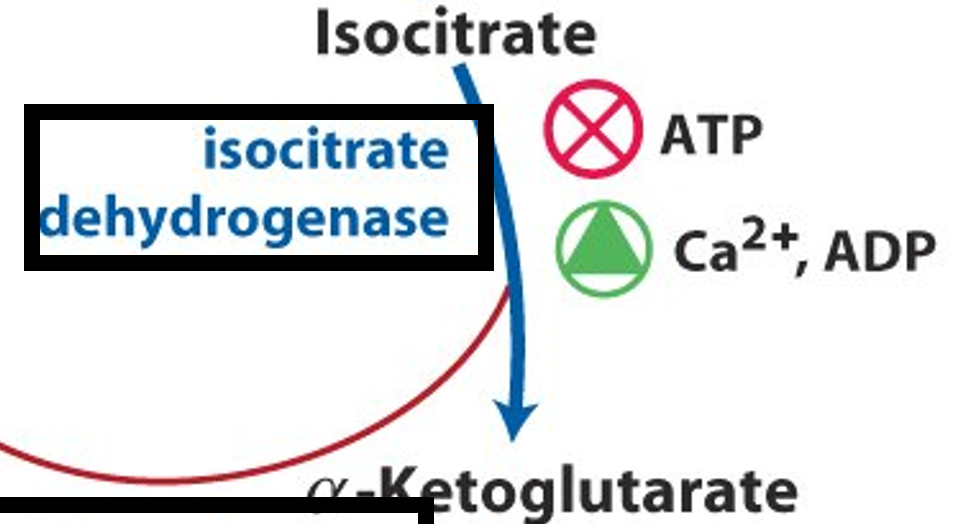
Isocitrate dehydrogenase is highly regulated to ensure proper energy production in response to the cell’s metabolic state. The enzyme is allosterically activated by ADP, which signals low energy levels in the cell and stimulates the enzyme to increase the rate of the citric acid cycle, thereby boosting ATP production. In contrast, ATP and NADH, products of the citric acid cycle and markers of high cellular energy, act as inhibitors of isocitrate dehydrogenase. This negative feedback mechanism prevents excessive activation of the citric acid cycle when energy levels are already high, maintaining metabolic balance.
The enzyme is also regulated by covalent modification. In eukaryotic cells, isocitrate dehydrogenase activity can be modulated by phosphorylation, which generally inhibits the enzyme. This phosphorylation is often regulated by signaling pathways responding to hormones and other factors that influence the energy needs of the cell.
In addition to its role in the citric acid cycle, isocitrate dehydrogenase is involved in biosynthetic pathways, particularly in the production of amino acids and other metabolites derived from alpha-ketoglutarate. Therefore, its regulation ensures not only energy production but also the availability of key intermediates for cellular growth and biosynthesis.
Through these regulatory mechanisms, isocitrate dehydrogenase ensures that the citric acid cycle operates efficiently, balancing energy production and the synthesis of essential molecules, and is tightly adjusted to the cell’s energetic and biosynthetic needs.