


Glycogen Phosphorylase
Carbohydrate Metabolism
Glycogen phosphorylase catalyzes the breakdown of glycogen into glucose-1-phosphate, initiating glycogenolysis.
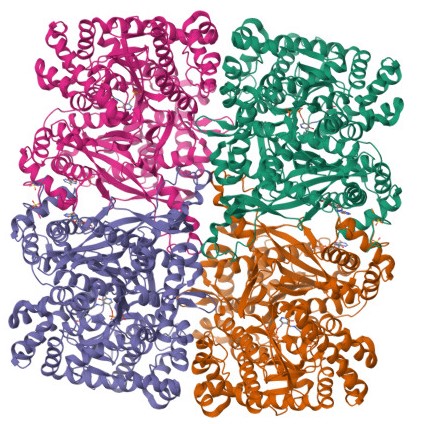
This enzyme is central to glycogen metabolism and plays a key role in maintaining blood glucose levels during periods of fasting or intense exercise. Glycogen phosphorylase works by cleaving the alpha-1,4-glycosidic bonds in glycogen, releasing glucose-1-phosphate, which is then converted into glucose-6-phosphate. The latter can either enter glycolysis to produce ATP or be converted into glucose in the liver for release into the bloodstream.
The activity of glycogen phosphorylase is tightly regulated through allosteric and covalent modification mechanisms. In its inactive form, glycogen phosphorylase exists as phosphorylase b, and its activity is activated by phosphorylation to phosphorylase a. This phosphorylation is mediated by phosphorylase kinase, which is in turn activated by cAMP signaling pathways, often triggered by hormones like glucagon and epinephrine during fasting or stress. These hormones signal the need for glucose mobilization, and the activation of glycogen phosphorylase ensures the rapid release of glucose from glycogen stores.
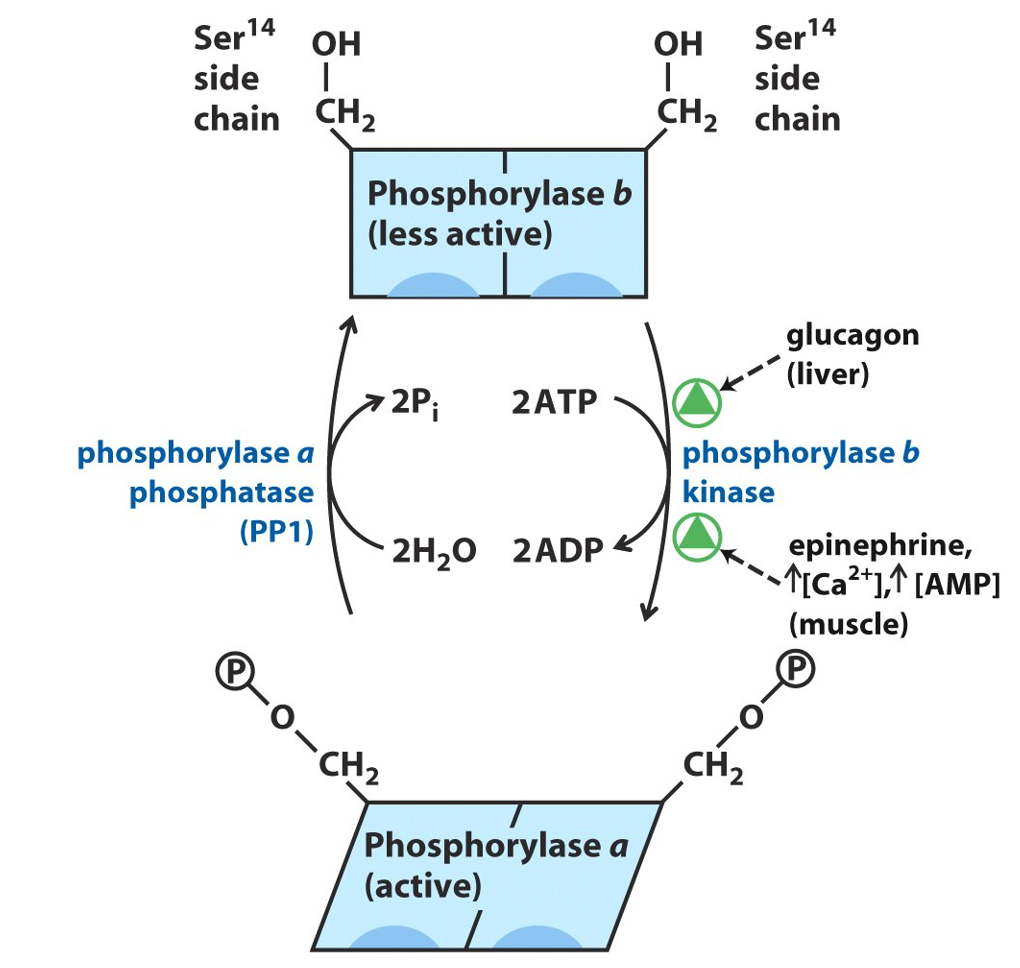
Glycogen phosphorylase is regulated by both phosphorylation and allosteric effects, ensuring that glycogen breakdown occurs appropriately depending on the cell’s energy needs. The enzyme is phosphorylated by phosphorylase kinase in response to signals like epinephrine and glucagon, which trigger the breakdown of glycogen to release glucose. In its phosphorylated (active) form, phosphorylase a, the enzyme is active and capable of breaking down glycogen into glucose-1-phosphate.
Allosterically, glycogen phosphorylase activity is regulated by the energy status of the cell. AMP, which signals low energy levels, activates glycogen phosphorylase by binding to the enzyme and stabilizing its active form. Conversely, ATP and glucose-6-phosphate, which indicate high energy availability, inhibit the enzyme, thus reducing glycogen breakdown when energy is abundant.
In the liver, glucose itself can allosterically inhibit glycogen phosphorylase by binding to it, reducing its activity and preventing excessive glucose release when glucose levels in the blood are already sufficient.
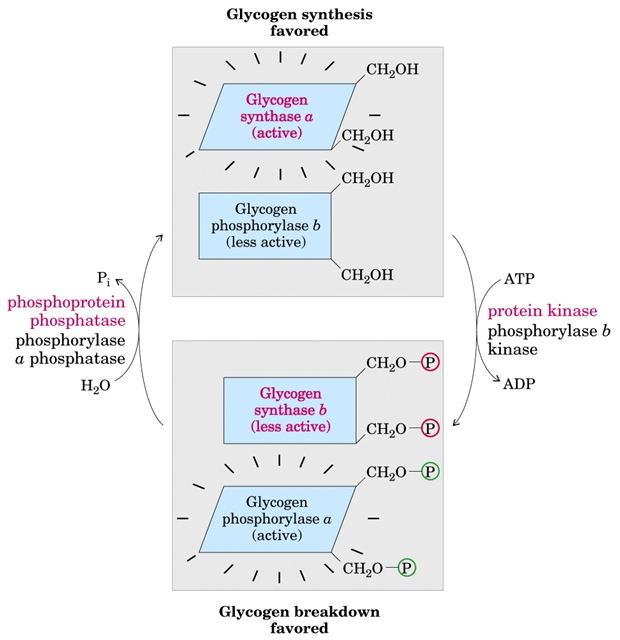
Together, these regulatory mechanisms ensure that glycogen is only broken down when needed, maintaining energy homeostasis and enabling efficient glucose supply during periods of metabolic demand.