
Glutamine-PRPP Amidotransferase
Nucleic Acid Metabolism
Glutamine-PRPP amidotransferase catalyzes the first step in purine nucleotide biosynthesis by transferring an amide group.
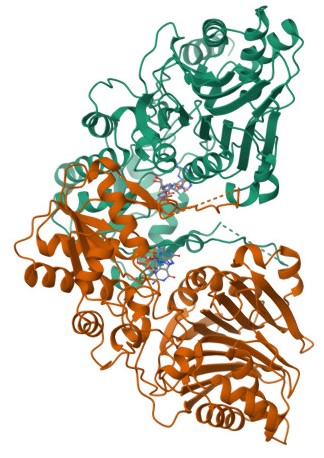
Glutamine-PRPP amidotransferase catalyzes the first committed step in purine nucleotide biosynthesis, where it transfers an amide group from glutamine to 5-phosphoribosyl-1-pyrophosphate (PRPP), forming 5-phosphoribosylamine. This reaction is a critical regulatory step in the synthesis of purine nucleotides, which are essential for DNA, RNA, and energy metabolism. The enzyme’s activity controls the flow of carbon and nitrogen into the purine biosynthesis pathway and helps maintain cellular nucleotide balance.
The enzyme operates in a complex pathway where the initial product, 5-phosphoribosylamine, is subsequently converted into inosine monophosphate (IMP), a precursor for adenine and guanine nucleotides. These nucleotides are essential for cellular functions, including protein synthesis, signal transduction, and energy metabolism.
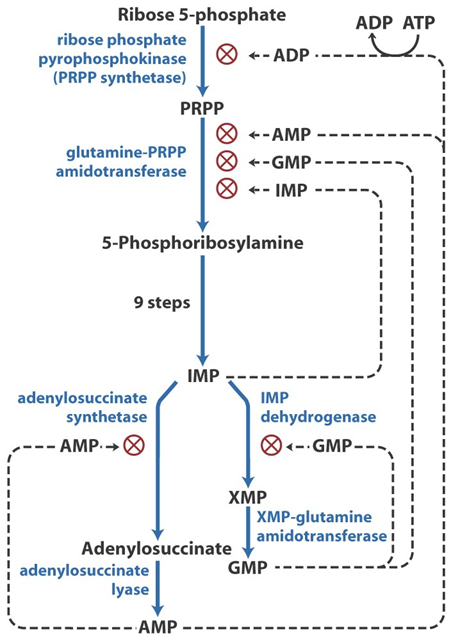
Glutamine-PRPP amidotransferase is tightly regulated at the allosteric level to maintain a balance between purine synthesis and cellular requirements. It is inhibited by high levels of AMP and GMP, the end products of the purine synthesis pathway, which signal that enough purines are available, preventing overproduction. Additionally, ADP also acts as an inhibitor, reflecting a state of sufficient energy.
On the other hand, PRPP itself is a potent activator of the enzyme, ensuring that purine biosynthesis proceeds when there is adequate ribose phosphate available for nucleotide synthesis. Glutamine also plays a key role as the nitrogen donor, and its availability can influence the activity of the enzyme, further linking the enzyme’s activity to cellular nitrogen and energy status.
This dual regulation, involving both feedback inhibition by purine nucleotides and activation by PRPP, allows the cell to adjust purine biosynthesis in response to its metabolic needs, ensuring an appropriate supply of nucleotides for critical cellular functions.