


Citrate Synthase
Carbohydrate Metabolism
Citrate synthase is an enzyme that catalyzes the first step in the citric acid cycle (Krebs cycle), where it facilitates the condensation of acetyl-CoA and oxaloacetate to form citrate.
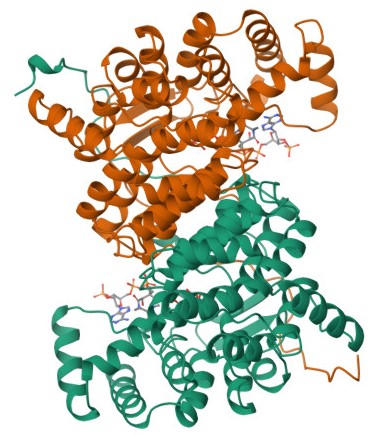
This reaction is highly exergonic, meaning it releases energy, and is considered a key regulatory point in the cycle. The formation of citrate from these two substrates is essential for continuing the citric acid cycle, which plays a central role in cellular energy production by generating ATP, NADH, and FADH2, which are used in oxidative phosphorylation to produce ATP.
Citrate synthase is a homodimeric enzyme found in the mitochondria, where it operates in conjunction with other enzymes of the citric acid cycle. It is an allosteric enzyme, and its activity is influenced by the concentrations of its substrates, acetyl-CoA and oxaloacetate, as well as the products of the citric acid cycle.
The reaction catalyzed by citrate synthase is irreversible, meaning it commits acetyl-CoA to the citric acid cycle, marking it as a crucial control point. Citrate is subsequently transformed through a series of reactions in the cycle, ultimately contributing to the generation of high-energy molecules like ATP and NADH. Moreover, the intermediates produced during the cycle are involved in various biosynthetic pathways, including amino acid and nucleotide synthesis, as well as fatty acid metabolism.
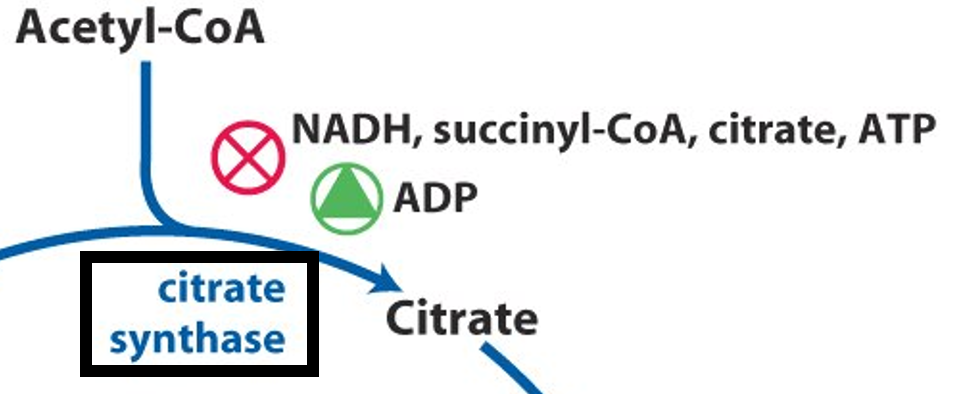
Citrate synthase is regulated by the concentrations of key metabolites involved in energy production. It is allosterically inhibited by high concentrations of ATP, which indicates that the cell has sufficient energy and that further energy production via the citric acid cycle is not immediately required. Similarly, NADH and succinyl-CoA also act as inhibitors, signaling a state of high energy or a fully functional cycle, thus reducing the enzyme’s activity.
Conversely, citrate synthase activity is stimulated by ADP and AMP, which are indicators of low energy availability in the cell, signaling the need to produce more ATP. These molecules promote the enzyme’s activity, ensuring that the citric acid cycle continues when the cell requires energy.
Additionally, acetyl-CoA is an essential substrate for citrate synthase, and its availability can directly influence enzyme activity. High levels of acetyl-CoA increase the enzyme’s activity, ensuring that the citric acid cycle proceeds efficiently when fat stores are being mobilized for energy.
Through these mechanisms, citrate synthase ensures that the citric acid cycle operates according to the cell’s energy needs, balancing energy production and consumption effectively.