

Carbamoyl PhosphateSynthetase I
Amino Acid Metabolism
Carbamoyl-phosphate synthetase I catalyzes the first step in the urea cycle, synthesizing carbamoyl phosphate.
Carbamoyl-phosphate synthetase I (CPS1) catalyzes the first step in the urea cycle, synthesizing carbamoyl phosphate from ammonia and bicarbonate. This reaction takes place in the mitochondria of liver cells and is crucial for the detoxification of excess nitrogen in the body. CPS1 utilizes two ATP molecules and combines ammonia, bicarbonate, and an ammonium ion to form carbamoyl phosphate, which is then further processed in the urea cycle to eventually form urea, which is excreted by the kidneys.
CPS1 is regulated primarily by the availability of N-acetylglutamate (NAG), an essential allosteric activator. NAG is synthesized from glutamate and acetyl-CoA and is required for the activation of CPS1. High levels of glutamate, particularly in conditions of increased protein catabolism, signal the need for increased urea cycle activity to process the nitrogen produced from amino acid breakdown. NAG, in turn, enhances CPS1’s affinity for its substrates and facilitates the synthesis of carbamoyl phosphate, thereby boosting urea production.
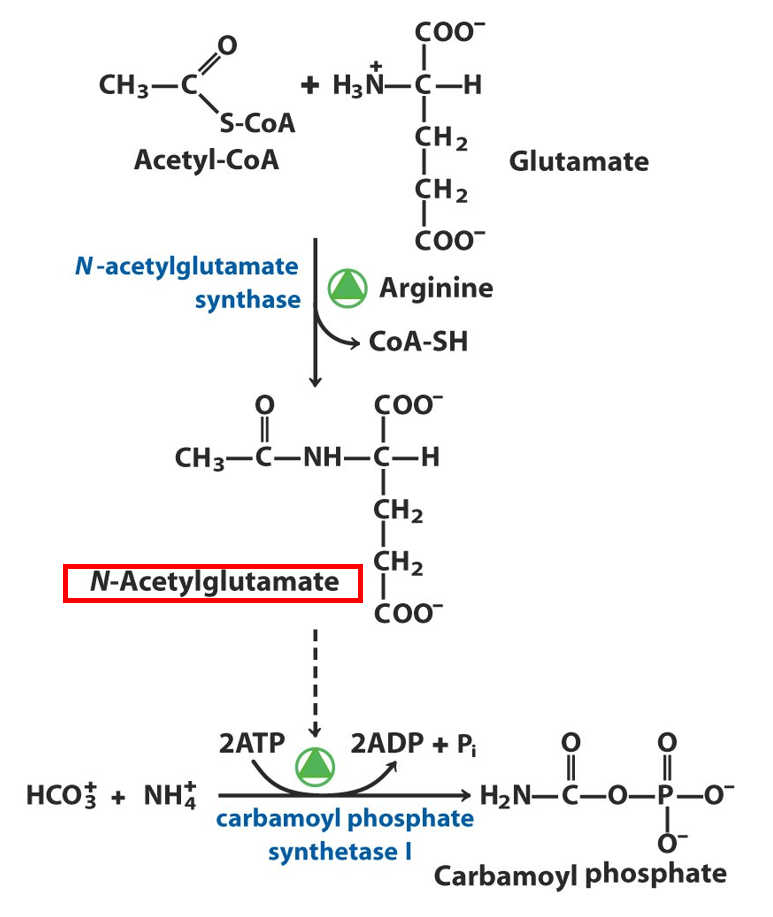
CPS1 is tightly regulated by N-acetylglutamate (NAG), which acts as an allosteric activator. The synthesis of NAG is promoted by high levels of glutamate and acetyl-CoA, which signal increased amino acid catabolism and the need for enhanced nitrogen disposal via the urea cycle. When nitrogen levels are elevated, such as after protein breakdown, NAG levels increase, activating CPS1 and stimulating carbamoyl phosphate production.
The activity of CPS1 is also regulated by the availability of its substrates: ammonia and bicarbonate. When these substrates are abundant, CPS1 is able to efficiently synthesize carbamoyl phosphate. This ensures that excess nitrogen is processed into urea and eliminated from the body, preventing the buildup of toxic ammonia.
In summary, CPS1 plays a critical role in detoxifying ammonia by initiating the urea cycle. Its regulation by NAG and substrate availability ensures that the cycle functions effectively to maintain nitrogen balance in the body, particularly under conditions of increased protein catabolism.