

UMP
Nucleotide Intermediates
UMP (uridine monophosphate) is a nucleotide involved in RNA synthesis and the metabolism of pyrimidine nucleotides.
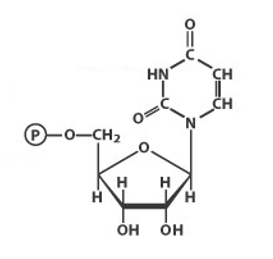
It is composed of the purine base uracil, the sugar ribose, and a single phosphate group. UMP is synthesized from orotate through a series of enzymatic reactions in the pyrimidine biosynthetic pathway, ultimately providing the precursor for the synthesis of other important pyrimidine nucleotides, including UDP (uridine diphosphate) and UTP (uridine triphosphate).
In RNA synthesis, UMP is incorporated into RNA molecules as a building block during transcription. It pairs with adenine (A) in the double-stranded DNA template, contributing to the structure of messenger RNA (mRNA), ribosomal RNA (rRNA), and transfer RNA (tRNA). The availability of UMP is crucial for maintaining the balance of RNA production, which in turn influences protein synthesis and other cellular functions.
UMP is also involved in several important metabolic processes, including nucleotide salvage pathways. In these pathways, UMP can be converted to UDP and UTP, which are essential for the synthesis of glycogen, as well as for the activation of sugar molecules in the formation of glycosidic bonds. UTP is particularly critical for the synthesis of glycogen, as it participates in the activation of glucose-1-phosphate, the precursor to glycogen synthesis in the liver and muscle cells.
Moreover, UMP serves as a precursor for the synthesis of cyclic UMP derivatives, such as cyclic AMP (cAMP), which plays a critical role in intracellular signaling. This makes UMP not only a fundamental component of RNA metabolism but also an important molecule in regulating cellular functions through signaling pathways.
In summary, UMP is an essential nucleotide involved in the biosynthesis of RNA, the metabolism of pyrimidine nucleotides, and cellular processes such as energy storage and signal transduction. Through its roles in these pathways, UMP is fundamental to cellular growth, division, and overall metabolic health.