
Succinyl-CoA
Carbonhydrate Metabolites
Succinyl-CoA is a key intermediate in the citric acid cycle and involved in heme biosynthesis.
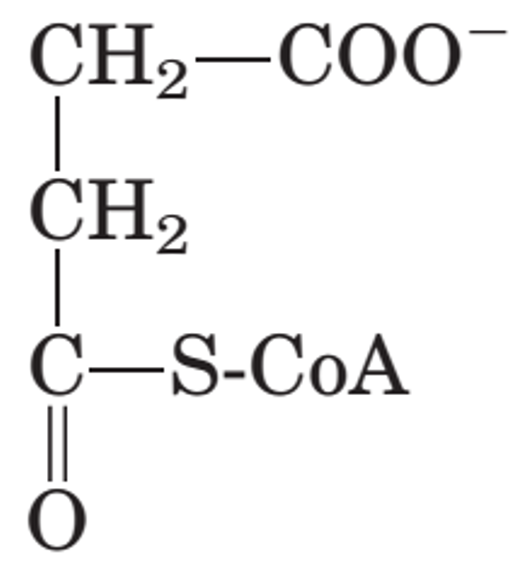
It is generated through the decarboxylation of alpha-ketoglutarate by the enzyme alpha-ketoglutarate dehydrogenase in the citric acid cycle, or through the conversion of methylmalonyl-CoA via methylmalonyl-CoA mutase in the pathway of branched-chain amino acid catabolism.
In the citric acid cycle, succinyl-CoA is converted to succinate by the enzyme succinyl-CoA synthetase, a reaction that also generates GTP (or ATP, depending on the tissue) through substrate-level phosphorylation. This step is part of the cycle’s energy-harvesting process, which contributes to the production of high-energy molecules such as NADH and FADH2, which are used in the electron transport chain for ATP production.
Succinyl-CoA also plays a pivotal role in heme biosynthesis, the process by which the body synthesizes heme, a crucial component of hemoglobin, myoglobin, and various cytochromes involved in electron transport. Succinyl-CoA combines with glycine in a reaction catalyzed by aminolevulinate synthase, producing aminolevulinic acid (ALA), the first committed step in heme synthesis. Disruptions in this pathway can lead to disorders such as porphyria, which result from the accumulation of intermediate compounds in heme production.
Furthermore, succinyl-CoA participates in various biosynthetic pathways. It serves as a donor of its CoA group in the synthesis of other molecules, including certain amino acids like valine, isoleucine, and methionine. Succinyl-CoA is also involved in the methylation reactions that contribute to the synthesis of various bioactive molecules, including neurotransmitters and certain vitamins.
Through its involvement in energy production, biosynthesis of heme, and participation in several key metabolic pathways, succinyl-CoA is an essential molecule for maintaining cellular function, energy balance, and overall metabolic health. Its role in both energy metabolism and synthetic pathways highlights its centrality to cellular homeostasis.