


Succinate
Carbonhydrate Metabolites
Succinate is a key intermediate in the citric acid cycle, involved in energy production and redox reactions.
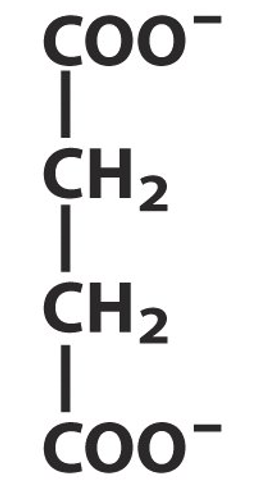
It is produced from the oxidation of succinyl-CoA, which itself is derived from several metabolic pathways, including the breakdown of fatty acids and amino acids. The conversion of succinate to fumarate by the enzyme succinate dehydrogenase is one of the key steps in the citric acid cycle, and this reaction contributes to both the production of ATP and the generation of reducing equivalents in the form of FADH2.
In addition to its role in energy production, succinate plays an important role in redox reactions. As it is converted to fumarate, the reduction of FAD to FADH2 helps generate high-energy electrons that are transferred to the electron transport chain (ETC) for oxidative phosphorylation, ultimately leading to the synthesis of ATP. Succinate, through this process, contributes to the cell’s overall energy balance and supports the generation of ATP needed for various cellular functions.
Succinate also functions as a signaling molecule in several cellular processes, including the regulation of gene expression. It has been shown to stabilize hypoxia-inducible factors (HIFs), proteins involved in the cellular response to low oxygen levels, and plays a role in hypoxic adaptation. Additionally, succinate has been implicated in inflammation and is believed to influence inflammatory pathways by acting as an endogenous signaling molecule that modulates the immune response. It does so by activating certain receptors, such as the GPR91 receptor, which is involved in regulating immune cell activity and promoting inflammation.
Beyond metabolism, succinate has been associated with the regulation of epigenetic processes. Recent research has suggested that succinate may influence histone modification and gene transcription, further linking metabolic intermediates to the regulation of cellular function. As such, succinate is not only crucial for energy production but also for maintaining cellular homeostasis and regulating key biological processes.
Overall, succinate is a central molecule in metabolism, linking energy production with cellular signaling, gene regulation, and immune responses. Its dual role in metabolic energy production and as a signaling mediator underscores its importance in maintaining cellular function and homeostasis, particularly in response to changes in the cellular environment.