

PRPP
Nucleotide Intermediates
PRPP (phosphoribosyl pyrophosphate) is a key intermediate in nucleotide synthesis and metabolic pathways.
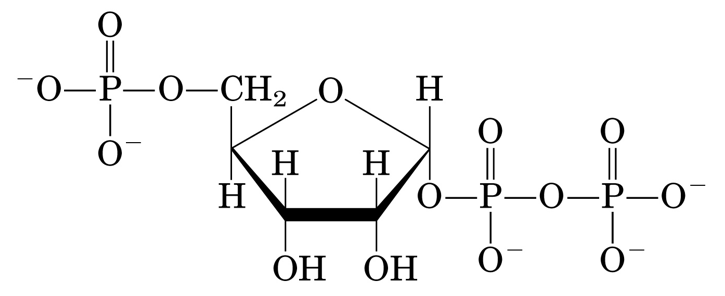
It is synthesized from ribose-5-phosphate, an intermediate in the pentose phosphate pathway, through the action of the enzyme ribose-phosphate diphosphokinase. This molecule consists of a ribose sugar attached to a pyrophosphate group, making it an essential donor of ribose and phosphate groups in several important biosynthetic processes.
PRPP is most notably involved in the de novo synthesis of purine and pyrimidine nucleotides. It serves as the precursor for both purine nucleotides (such as adenine and guanine) and pyrimidine nucleotides (such as uracil, cytosine, and thymine), making it a pivotal molecule in cellular replication, transcription, and energy metabolism. The synthesis of purine nucleotides begins with the condensation of PRPP with glutamine to form 5-phosphoribosylamine, a key intermediate in purine biosynthesis. Similarly, in pyrimidine biosynthesis, PRPP is combined with orotate to form orotidine monophosphate (OMP), which is subsequently converted into other pyrimidine nucleotides.
In addition to its role in nucleotide synthesis, PRPP is involved in the salvage pathways for nucleotides, where it participates in the recycling of purines and pyrimidines, allowing cells to reuse these molecules rather than synthetize them de novo. This helps maintain nucleotide pool balance, especially in rapidly dividing cells.
PRPP also regulates key enzymes in nucleotide metabolism. The concentration of PRPP can influence the activity of enzymes like ribose-phosphate pyrophosphokinase and amidophosphoribosyltransferase, thus controlling the overall rate of purine and pyrimidine biosynthesis. In this way, PRPP acts as an allosteric activator of certain enzymes, ensuring that the production of nucleotides is matched to the cell’s needs for DNA and RNA synthesis.
Moreover, PRPP is involved in histidine biosynthesis, where it serves as a precursor for the formation of histidine, an essential amino acid. Additionally, PRPP plays a role in the regulation of enzyme activity in response to metabolic changes, reflecting its critical position at the intersection of various biosynthetic pathways.
Overall, PRPP is a key metabolic intermediate that enables nucleotide synthesis, recycling, and regulation, playing an essential role in maintaining cellular function, growth, and division. Its involvement in both anabolic and catabolic pathways highlights its importance in cellular energy metabolism, DNA and RNA synthesis, and overall cell homeostasis.