

Orotate
Nucleotide Intermediates
Orotate is a pyrimidine precursor involved in the synthesis of nucleotides and DNA/RNA metabolism.
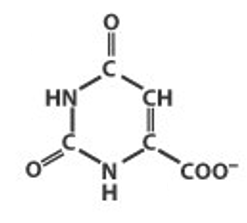
It is synthesized from carbamoyl phosphate and aspartate through the action of the enzyme carbamoyl phosphate synthetase II (CPSII) in the de novo pyrimidine biosynthetic pathway. Orotate itself is not a nucleotide, but it is an essential precursor to uridine monophosphate (UMP), which is the first pyrimidine nucleotide in the pathway and serves as the basis for the synthesis of other pyrimidine nucleotides like cytidine and thymidine.
Orotate is converted to orotidine monophosphate (OMP) by the enzyme orotate phosphoribosyltransferase (OPRT). OMP is then decarboxylated to form UMP by OMP decarboxylase. UMP can then be phosphorylated to UDP and UTP, which are necessary for the synthesis of RNA and for the production of thymidine, which is crucial for DNA synthesis. Through this pathway, orotate plays a pivotal role in nucleotide metabolism and cellular proliferation.
Beyond its role in nucleotide synthesis, orotate has been implicated in regulating cellular growth and differentiation. Its levels are tightly controlled within cells, as an excess or deficiency in pyrimidine nucleotides can disrupt cell division and lead to genomic instability. In certain metabolic disorders, such as orotic aciduria, a deficiency in the enzymes responsible for converting orotate to UMP leads to the accumulation of orotate in the urine and can cause developmental delays and other health issues.
In addition, orotate is involved in the salvage pathways of pyrimidine metabolism, where it can be converted back into nucleotides from pre-existing bases. This allows cells to efficiently reuse pyrimidine nucleotides, which is particularly important in tissues with rapid turnover or during periods of stress.
Thus, orotate is essential for proper nucleotide synthesis, genomic stability, and cellular function, making it a critical molecule for both normal cellular metabolism and the regulation of cell division and growth.