


Malate
Carbonhydrate Metabolites
Malate is an intermediate in the citric acid cycle, playing a key role in energy production.
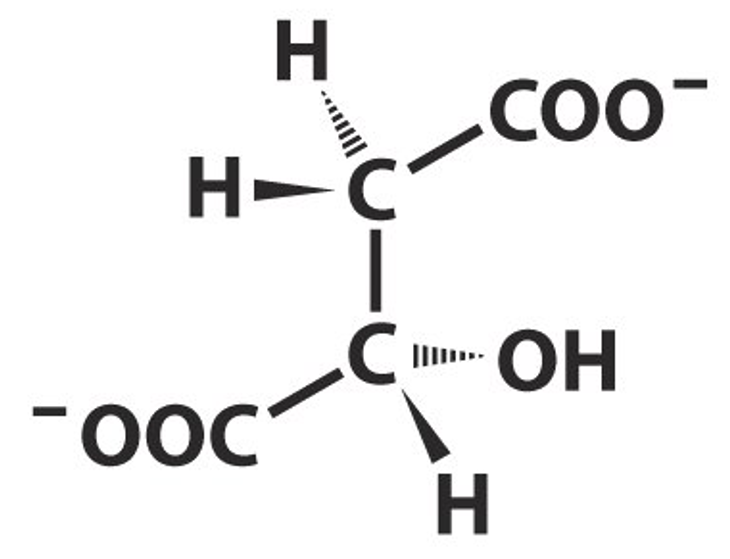
Malate is formed from the hydration of fumarate, catalyzed by the enzyme fumarase, and it is subsequently converted into oxaloacetate by malate dehydrogenase, generating NADH in the process. This NADH is used in the electron transport chain to produce ATP, the primary energy carrier in cells.
Malate also plays a crucial role in gluconeogenesis, the process of producing glucose from non-carbohydrate precursors, mainly in the liver. During gluconeogenesis, malate is transported from the mitochondria to the cytoplasm, where it is converted back to oxaloacetate and then to phosphoenolpyruvate, a key step in the formation of glucose. This process is particularly important during fasting, when the body needs to generate glucose from alternative sources to maintain blood sugar levels.
In addition to its involvement in energy metabolism, malate is an important player in the malate-aspartate shuttle, a system that transports reducing equivalents (electrons) across the mitochondrial membrane. This shuttle allows NADH produced in the cytoplasm to enter the mitochondria, where it can be used in the electron transport chain to generate ATP.
Malate is also involved in the intermediary metabolism of amino acids, such as aspartate and glutamate, and plays a role in the acid-base balance of cells. It is used in the regulation of intracellular pH, particularly under conditions where there is an accumulation of protons due to increased metabolic activity.
Through its central role in energy production, gluconeogenesis, and metabolic regulation, malate is a crucial molecule for maintaining cellular function and energy balance, especially in tissues with high metabolic demands, such as the liver, heart, and muscle. Its involvement in multiple metabolic pathways makes it an indispensable component of cellular metabolism and overall homeostasis.