

Lactate
Carbonhydrate Metabolites
Lactate is a byproduct of anaerobic metabolism, serving as an energy source and involved in the Cori cycle.
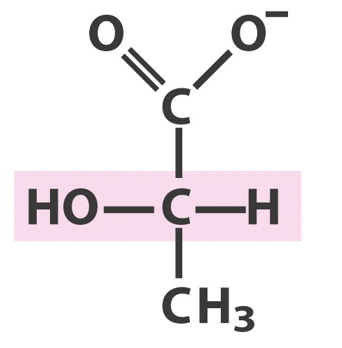
It is formed from pyruvate through the action of the enzyme lactate dehydrogenase (LDH), which reduces pyruvate to lactate while oxidizing NADH to NAD+. This reaction allows glycolysis to continue producing ATP in the absence of sufficient oxygen, which is crucial during periods of high energy demand, such as during sprinting or heavy lifting.
Though often associated with muscle fatigue and soreness, lactate is not a waste product; rather, it serves as an important energy source. Once produced, lactate can be transported via the bloodstream to other tissues, such as the liver, where it is converted back to pyruvate and then to glucose through gluconeogenesis in the Cori cycle. This process helps regenerate glucose, which can then be used by muscles or other tissues, providing a mechanism for energy recovery during prolonged exercise.
Lactate is also used as a fuel source by the heart and brain, particularly under conditions of metabolic stress or when glucose availability is limited. In these tissues, lactate is converted back into pyruvate, which then enters the citric acid cycle to produce ATP. This process highlights lactate’s role not just as a byproduct but also as a vital contributor to energy production under anaerobic or low-oxygen conditions.
Furthermore, lactate has been recognized as a signaling molecule, influencing gene expression and cellular metabolism. It has been shown to activate pathways that promote mitochondrial biogenesis, enhancing the cell’s ability to generate energy efficiently, even in oxygen-limited environments.
In summary, lactate is a crucial intermediary in metabolic processes, facilitating anaerobic energy production, supporting recovery through the Cori cycle, and serving as an energy source for various tissues. Its role extends beyond being merely a byproduct of anaerobic metabolism, contributing to cellular function and systemic energy balance.