


Glycogen
Carbonhydrate Metabolites
Glycogen is a polysaccharide that stores glucose for energy in liver and muscle cells.
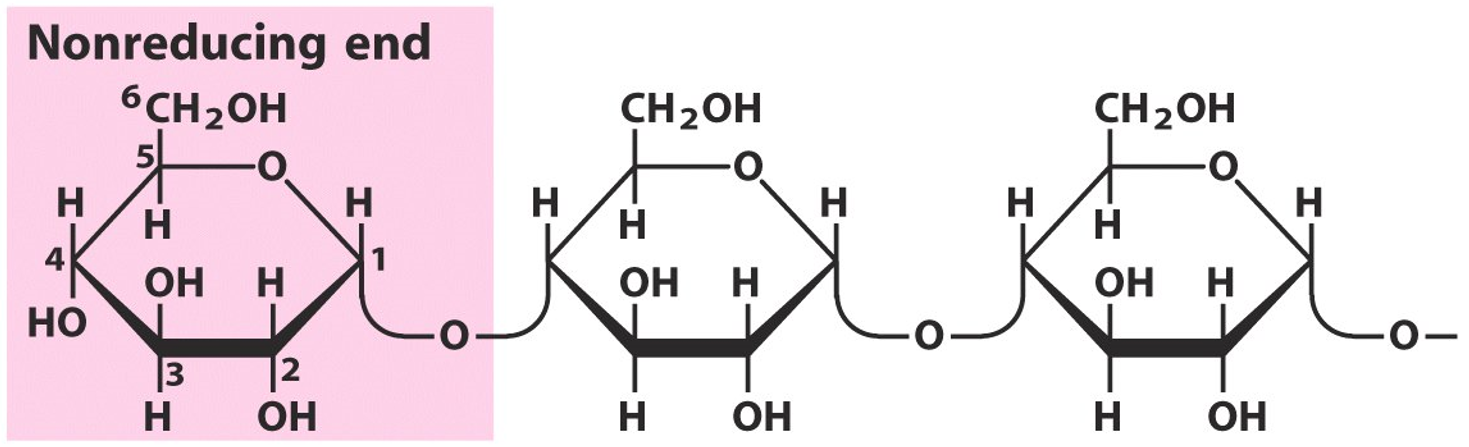
Glycogen is a highly branched polysaccharide that serves as the primary storage form of glucose in the body, primarily in the liver and muscle cells. It is composed of glucose units linked together by glycosidic bonds, with branching points that allow for rapid release of glucose when energy is needed. Glycogen plays a critical role in maintaining blood glucose levels and providing a readily accessible energy source during periods of fasting, physical activity, or stress.
In the liver, glycogen acts as a reservoir of glucose that can be broken down into glucose-6-phosphate and then converted to free glucose by the enzyme glucose-6-phosphatase. This glucose is released into the bloodstream to maintain normal blood glucose levels, especially during fasting or between meals. In muscle cells, glycogen is primarily used locally to fuel muscle contractions during exercise, where it is converted into glucose-6-phosphate and enters the glycolytic pathway to produce ATP.
The process of glycogen synthesis is known as glycogenesis. When glucose is abundant, such as after eating, glucose is converted into glycogen by the enzyme glycogen synthase, which adds glucose units to the growing glycogen molecule. Conversely, during periods of low glucose availability, such as between meals or during prolonged physical activity, glycogenolysis occurs, where glycogen is broken down into glucose-1-phosphate by the enzyme glycogen phosphorylase. This glucose-1-phosphate is then converted to glucose-6-phosphate for energy production.
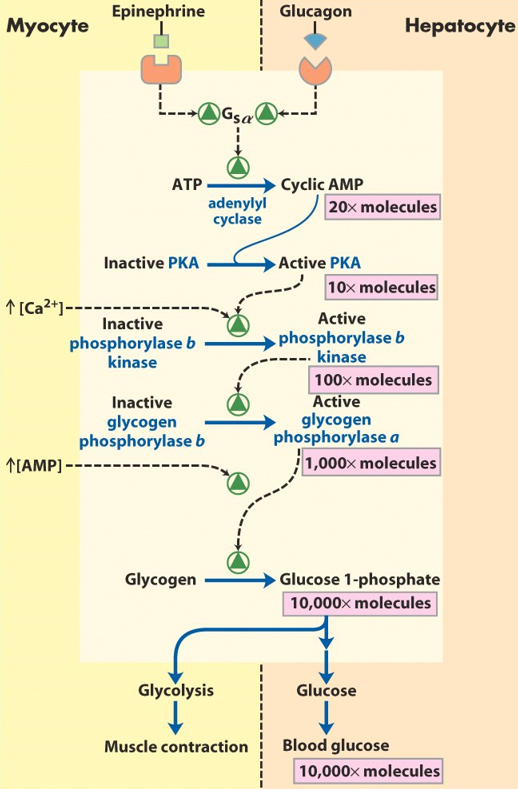
Hormonal regulation plays a key role in glycogen metabolism. Insulin, released after meals when glucose levels are high, promotes glycogen synthesis by activating glycogen synthase and inhibiting glycogen phosphorylase. Conversely, glucagon (from the pancreas) and epinephrine (from the adrenal glands) stimulate glycogen breakdown during fasting or physical stress, ensuring that glucose is available for energy in peripheral tissues.
Glycogen is a vital energy reservoir that allows the body to quickly respond to fluctuations in glucose levels, making it crucial for energy homeostasis and supporting cellular functions, particularly in tissues with high energy demands, such as muscles and the liver. Dysregulation of glycogen metabolism can lead to disorders such as glycogen storage diseases, where abnormal glycogen synthesis or breakdown impairs normal metabolic function.