


Glycerol-3-Phosphate
Lipid Metabolites
Glycerol-3-phosphate is an intermediate in glycolysis and gluconeogenesis, involved in lipid metabolism and energy production.
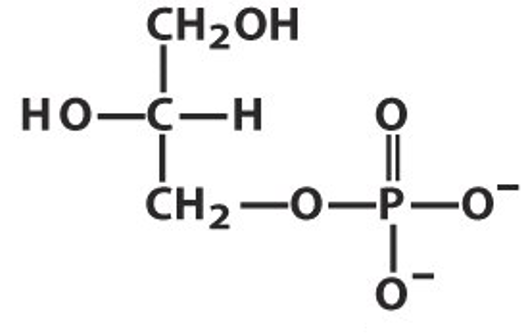
It is produced from glycerol or dihydroxyacetone phosphate (DHAP), an intermediate of glycolysis, through the action of glycerol kinase or glycerol-3-phosphate dehydrogenase, respectively. As a central molecule in the metabolism of both glucose and lipids, glycerol-3-phosphate serves as a precursor for the synthesis of triglycerides and phospholipids.
In lipid metabolism, glycerol-3-phosphate is essential for the formation of glycerolipids. It provides the backbone for the esterification of fatty acids to form triglycerides, which are stored in adipose tissue as energy reserves. It is also involved in the synthesis of phospholipids, which are critical components of cell membranes. In this context, glycerol-3-phosphate plays a vital role in maintaining lipid homeostasis, especially during periods of fasting or high-fat diet, when the body relies on stored triglycerides for energy.
In glycolysis, glycerol-3-phosphate can be produced from DHAP through the action of glycerol-3-phosphate dehydrogenase (GPDH). This reaction, while less prominent than other glycolytic steps, contributes to the overall flux of carbon through glycolysis, especially under conditions where glycerol is used as a substrate. The reverse reaction, where glycerol-3-phosphate is converted back to DHAP, plays a key role in gluconeogenesis, the process of glucose production from non-carbohydrate precursors, which is crucial during fasting or prolonged exercise.
Additionally, glycerol-3-phosphate is involved in the shuttling of reducing equivalents between the cytosol and mitochondria, particularly through the glycerol-3-phosphate shuttle, a mechanism that transfers electrons to the electron transport chain for ATP production. This shuttle is important for maintaining the redox balance in the cell and facilitating efficient energy production in tissues like muscle and brain, where rapid ATP generation is needed.
Overall, glycerol-3-phosphate plays a multifaceted role in cellular metabolism, linking carbohydrate and lipid metabolism, supporting energy production, and maintaining lipid storage and synthesis. Its importance spans from energy balance to the regulation of metabolic pathways that are essential for normal cellular function and homeostasis.