

Fumarate
Carbonhydrate Metabolites
Fumarate is an intermediate in the citric acid cycle, crucial for energy production and cellular metabolism.
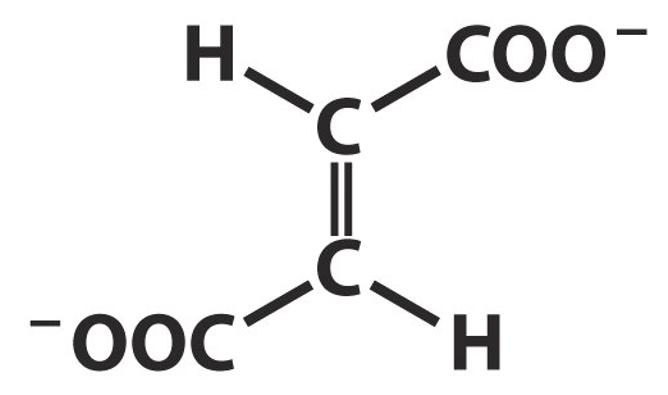
It is formed from the oxidation of succinate by the enzyme succinate dehydrogenase and is subsequently converted to malate by the enzyme fumarase. This reaction is integral to the continuation of the citric acid cycle, which generates ATP, NADH, and FADH2, crucial energy carriers that power cellular processes.
Fumarate is involved in several critical metabolic pathways beyond its role in the TCA cycle. It serves as an important precursor for glucose and amino acid metabolism. Fumarate can be converted into malate, which can enter gluconeogenesis, the process of synthesizing glucose from non-carbohydrate sources, crucial during periods of fasting or prolonged exercise.
In addition, fumarate plays a role in ammonia detoxification in the liver, as part of the urea cycle. Through the TCA cycle, fumarate helps balance nitrogen metabolism by contributing to the cycle’s intermediates, which are involved in the conversion of ammonia into urea for excretion.
Fumarate also has a role in redox regulation and cellular signaling. As a key intermediate in mitochondrial metabolism, it affects the balance of reactive oxygen species (ROS) and the cellular redox state. Disruptions in fumarate metabolism can affect mitochondrial function and are associated with various metabolic disorders, including fumarate hydratase deficiency, a rare genetic disorder that leads to tumor formation due to impaired fumarate conversion.
Moreover, fumarate has been implicated in epigenetic regulation. Recent research has shown that fumarate can influence gene expression by affecting the activity of histone demethylases, enzymes that play a role in modifying chromatin structure and gene activity. This opens up new avenues of understanding for fumarate’s role in cell growth, development, and disease, particularly in cancer biology.
Thus, fumarate is not only a key metabolic intermediate but also an important molecule for energy production, nitrogen balance, cellular signaling, and regulation of gene expression, making it vital for maintaining cellular homeostasis and function.