


Citrate
Carbonhydrate Metabolites
Citrate is an intermediate in the citric acid cycle, involved in energy production and metabolic regulation.
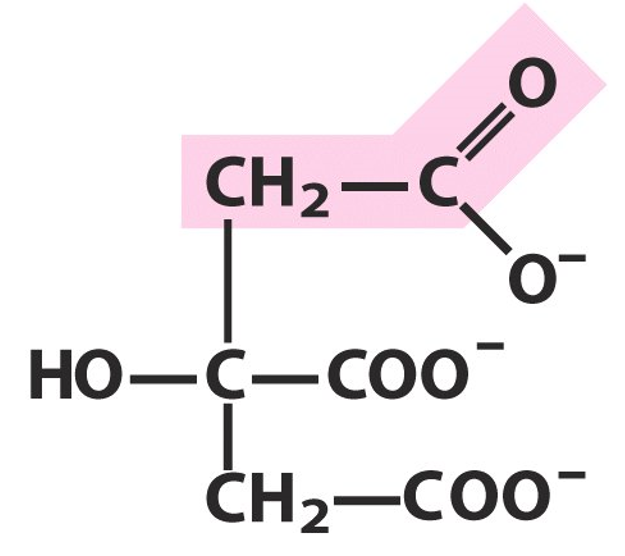
It is formed by the condensation of acetyl-CoA and oxaloacetate, catalyzed by the enzyme citrate synthase. Citrate plays a pivotal role in cellular metabolism by participating in the complete oxidation of acetyl-CoA to produce ATP, NADH, FADH2, and carbon dioxide, all of which are essential for energy production in the cell.
Beyond its role in the citric acid cycle, citrate acts as a key regulator of metabolic pathways. When citrate levels are high, it can inhibit phosphofructokinase-1 (PFK-1), a critical enzyme in glycolysis, thus slowing down glucose metabolism when energy is abundant. This helps prevent the unnecessary breakdown of glucose when cellular energy stores are sufficient. Citrate also serves as a precursor for the synthesis of fatty acids and cholesterol in the cytoplasm. When citrate accumulates in the mitochondria, it is transported into the cytoplasm, where it is broken down into acetyl-CoA, which is then used for lipogenesis, particularly during times of excess nutrient availability.
In addition to its roles in energy production and biosynthesis, citrate is involved in regulating cellular pH. In the cytosol, citrate can act as a buffer, helping to maintain the proper acid-base balance within the cell. Furthermore, citrate is involved in the regulation of acetyl-CoA availability for various metabolic pathways, including protein acetylation, which plays a role in gene expression and cellular signaling.
Citrate is also involved in cellular signaling pathways. For example, the accumulation of citrate in the mitochondria can signal an increase in energy availability, triggering a shift in metabolism from catabolic to anabolic processes, such as fatty acid synthesis. This link between citrate and metabolic regulation is essential for maintaining cellular homeostasis and responding to changes in nutrient availability.
Thus, citrate is a central molecule in cellular metabolism, not only driving the production of ATP in the citric acid cycle but also playing important regulatory roles in energy storage, lipid biosynthesis, and cellular signaling. Its involvement in these processes ensures that the cell can adapt to varying energy demands and maintain metabolic balance.