


CTP
Nucleotide Intermediates
CTP is a nucleotide essential for RNA synthesis, lipid metabolism, and phospholipid biosynthesis.
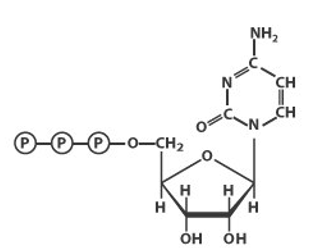
As a pyrimidine nucleotide, it is derived from UTP (Uridine Triphosphate) through an amination reaction catalyzed by the enzyme CTP synthetase, which utilizes glutamine or ammonia as a nitrogen donor.
In RNA synthesis, CTP serves as one of the four nucleotide building blocks incorporated by RNA polymerase during the transcription process, enabling the formation of RNA molecules crucial for protein synthesis and other cellular functions.
Beyond its role in RNA synthesis, CTP is critical in lipid metabolism, particularly in the biosynthesis of phospholipids. It acts as an energy-rich donor molecule in the activation of phosphatidic acid, forming CDP-diacylglycerol, a key intermediate in the synthesis of phosphatidylinositol, phosphatidylglycerol, and cardiolipin. Additionally, CTP is involved in the synthesis of phosphatidylcholine and phosphatidylethanolamine, which are major components of cellular membranes, ensuring their structural integrity and functionality.
CTP also plays a role in regulating metabolic pathways. The enzyme CTP synthetase is tightly regulated by feedback inhibition from CTP itself, maintaining balanced nucleotide pools within the cell. This regulation ensures that CTP levels are optimized for its various functions without depleting cellular resources.
Through its roles in RNA production, membrane biosynthesis, and metabolic regulation, CTP is indispensable for cellular function and the maintenance of life processes.