

Aspartate
Amino Acid
Aspartate is an amino acid involved in protein synthesis, urea cycle, and neurotransmission.
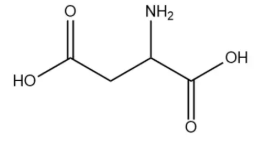
It is synthesized in the body from oxaloacetate, a key intermediate in the citric acid cycle. As a non-essential amino acid, aspartate is crucial for synthesizing other amino acids, such as asparagine, and for the production of purine and pyrimidine nucleotides, which are vital for cell growth and DNA/RNA synthesis.
In the urea cycle, aspartate plays a critical role by contributing an amino group to help convert ammonia into urea, which is then excreted from the body. This process is essential for regulating nitrogen balance and preventing the buildup of toxic ammonia. Aspartate also acts as an excitatory neurotransmitter in the central nervous system, participating in signal transmission between neurons, particularly in the brain and spinal cord.
Beyond its roles in metabolism and neurotransmission, aspartate is involved in transamination reactions, where it donates an amino group to other molecules, aiding in the synthesis of various amino acids and helping maintain nitrogen balance in the body. Through these diverse functions, aspartate plays a fundamental role in cellular processes, energy production, and maintaining overall metabolic and neurological health.