


Acetyl-CoA
Carbonhydrate Metabolites
Acetyl-CoA is a central molecule in metabolism, involved in energy production, biosynthesis, and the citric acid cycle.
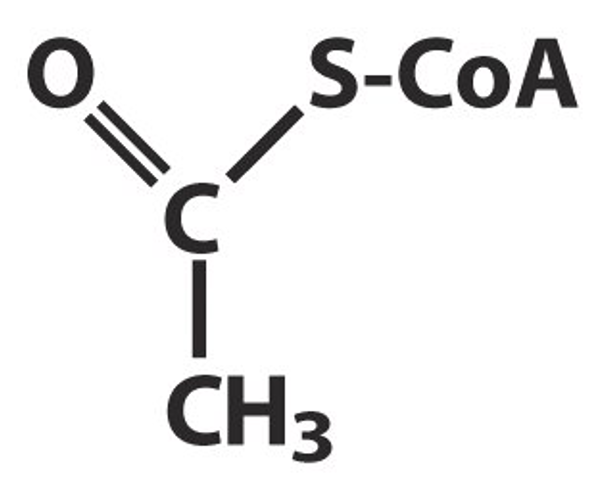
It is synthesized from various precursors such as glucose, fatty acids, and amino acids, and serves as a central point of convergence for several metabolic pathways. Acetyl-CoA is primarily produced in the mitochondria through the oxidation of pyruvate (derived from glucose) or the breakdown of fatty acids.
Once formed, Acetyl-CoA enters the citric acid cycle, where it combines with oxaloacetate to form citrate, which undergoes a series of reactions that generate high-energy molecules like NADH, FADH2, and GTP. These molecules are then used in the electron transport chain to produce ATP, the cell’s main energy currency. This process is crucial for aerobic respiration, where Acetyl-CoA plays a central role in energy production.
In addition to energy generation, Acetyl-CoA is involved in biosynthesis. It is a precursor for the synthesis of fatty acids, cholesterol, and other lipids, which are essential for cell membrane formation and various cellular functions. Acetyl-CoA is also important for the synthesis of ketone bodies during periods of fasting or prolonged exercise, providing an alternative energy source for tissues like the brain and muscle.
Acetyl-CoA also plays a key role in the regulation of gene expression. It serves as a donor of acetyl groups in histone acetylation, a process that modifies chromatin structure and influences gene expression. This aspect of Acetyl-CoA function ties metabolism to cellular signaling, demonstrating how energy status can influence cellular function at the genetic level.
Furthermore, Acetyl-CoA is involved in the biosynthesis of neurotransmitters, such as acetylcholine, which is crucial for nerve function. Through these diverse roles, Acetyl-CoA integrates energy metabolism with cellular growth, signaling, and homeostasis, making it one of the most important molecules in biochemistry. Its central position in metabolic networks highlights its essential function in maintaining cellular and organismal health.