

3-Phosphoglycerate
Carbonhydrate Metabolites
3-Phosphoglycerate is an intermediate in glycolysis and the Calvin cycle, involved in energy production and biosynthesis.
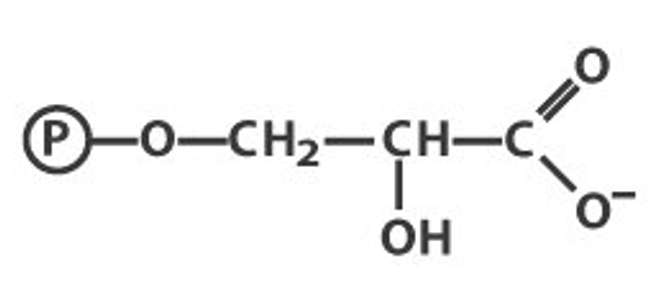
In glycolysis, 3-phosphoglycerate is formed from the conversion of 1,3-bisphosphoglycerate, catalyzed by the enzyme phosphoglycerate kinase. This reaction generates ATP by substrate-level phosphorylation and results in the formation of 3PG, which is further metabolized to pyruvate, producing additional ATP and NADH, crucial for energy production in cells.
In the Calvin cycle, 3-phosphoglycerate is generated from ribulose-1,5-bisphosphate (RuBP) by the enzyme RuBisCO during the carbon fixation step. This process is vital for the synthesis of organic molecules from carbon dioxide in plants and photosynthetic organisms. 3PG in the Calvin cycle is subsequently reduced to glyceraldehyde-3-phosphate (G3P), which can be further processed into sugars, starch, and other important biosynthetic precursors, playing a crucial role in plant growth and energy storage.
3-Phosphoglycerate is also involved in the biosynthesis of amino acids and other important metabolites. In certain metabolic pathways, 3PG can be converted into serine, an amino acid that is involved in the synthesis of proteins, nucleotides, and other biomolecules. Additionally, 3PG is involved in the synthesis of phospholipids and nucleotides, making it an important precursor in the generation of key cellular components.
Through its central role in energy metabolism, photosynthesis, and biosynthesis, 3-phosphoglycerate is integral to the functioning of cells, whether in energy production, carbon fixation, or the synthesis of essential biomolecules. Its involvement in these critical pathways underlines its importance in cellular homeostasis and metabolic flexibility.